
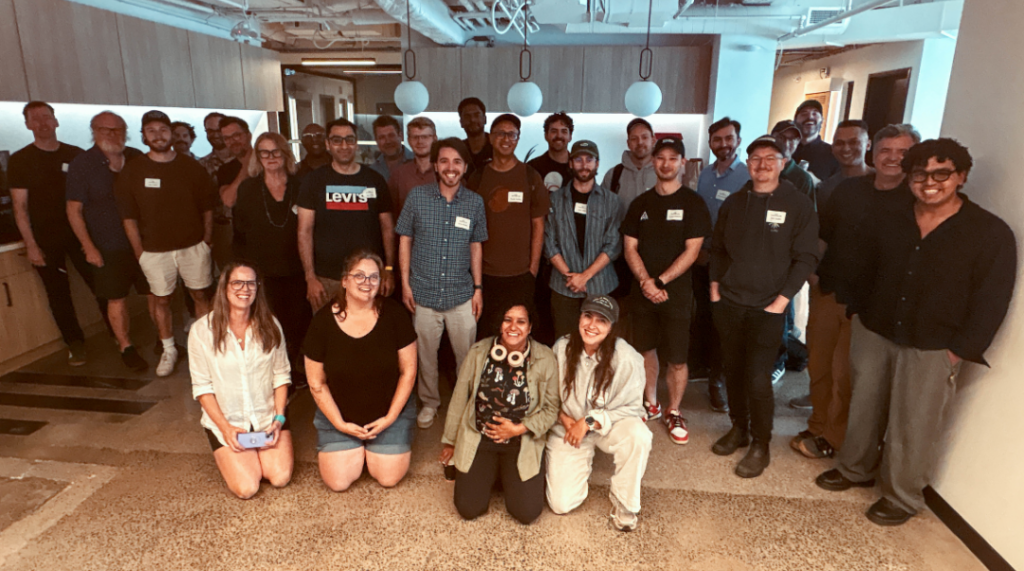
The recent CSC Master Class brought together 21 cinematographers from across Canada for two days of learning, creative discussion, and behind-the-scenes insight from leading industry professionals.
As the first edition of the CSC Master Class, the weekend provided participants with a unique opportunity to explore the full cinematography workflow – from creative development and on-set decision-making to post-production and colour.
Featuring sessions with Luc Montpellier CSC ASC, Jeremy Benning CSC ASC, Andrew Richardson, DIT, Levi Pounds, On Location Services Supervisor and Mark Kueper, Senior Colourist, the program offered participants direct access to experienced professionals and a closer look at the collaborative process behind today’s productions.
Day One: Creative Process and On-Set Workflow
The first day featured sessions led by Luc Montpellier CSC ASC and Jeremy Benning CSC ASC.
In the morning, Montpellier shared insights into his creative process, career journey, and approach to cinematography. His presentation explored his early work with filmmaker Guy Maddin, projects including Emotional Arithmetic and On Swift Horses, and his award-winning work on Women Talking. Montpellier also discussed his long-standing collaboration with director Sarah Polley, highlighting the importance of developing a shared visual language between cinematographer and director.
Throughout his presentation, Montpellier spoke about the role of the cinematographer in shaping a story visually, emphasizing the importance of bringing a unique perspective to each project while supporting the director’s vision.
The afternoon session featured Jeremy Benning CSC ASC, who provided participants with a look at his approach to lighting, camera movement, and on-set collaboration. Participants toured the set of a major studio production, explored lighting setups, and observed the process of building scenes from initial concept through execution.
With members of his crew present, Benning highlighted the collaborative nature of cinematography and the importance of communication between departments, including the cinematographer, operator, DIT, and grip teams. Participants were able to watch scenes being recreated and adjusted in real time, including both daylight and night sequences using an established LUT for the production.
Day Two: Post-Production Workflows at Picture Shop Toronto
The second day of the Master Class took place at Picture Shop Toronto, which generously provided its facilities for two specialized sessions focused on the post-production process.
Participants began the day with Andrew Richardson, DIT, and Levi Pounds, On Location Services Supervisor at Picture Shop, who provided insight into the dailies workflow and the important role this stage plays in maintaining the creative vision of a production. The session explored the technical and collaborative processes involved in preparing footage for review and ensuring effective communication between production and post-production teams.
The program continued with Senior Colourist Mark Kueper, who led participants through the colour grading process and shared his approach to shaping the final look of a project. With over 20 years of experience at Picture Shop, Kueper discussed the creative collaboration between cinematographers and colourists and how colour decisions contribute to the overall storytelling process.
Together, these sessions provided participants with a deeper understanding of the work that continues after production wraps and the many creative decisions involved in bringing a cinematographer’s vision through to the final image.
Connecting the Next Generation of Cinematographers
Throughout the Master Class, CSC Full Members attended as ambassadors, connecting with participants, sharing their experiences, and answering questions about the industry.
Participants travelled from across Canada to take part in the program, including Andrew Forbes from Winnipeg and Gontran Chartré from Montreal. Participants expressed their appreciation for the opportunity to learn directly from established professionals and gain insight into the craft and realities of working in the industry.
The CSC would like to thank all instructors, ambassadors, and participants who helped make our first Master Class a success. Huge thank you to our partners, Sunbelt Rentals Film & TV and Picture Shop in making this happen.
La récente Classe de maître de la CSC a réuni 21 directeurs et directrices photo de la relève provenant de partout au Canada pour deux journées d’apprentissage pratique, de discussions créatives et d’échanges privilégiés avec des professionnels de premier plan de l’industrie.
En tant que première édition de la Classe de maître de la CSC, cette fin de semaine a offert aux participants une occasion unique d’explorer l’ensemble du processus de la direction de la photographie, du développement créatif et de la prise de décision sur le plateau jusqu’à la postproduction et à l’étalonnage.
Animé par Luc Montpellier CSC ASC, Jeremy Benning CSC ASC, Andrew Richardson, DIT, et Mark Kueper, étalonneur principal, le programme a permis aux participants d’échanger directement avec des professionnels chevronnés et d’approfondir leur compréhension du processus collaboratif qui sous-tend les productions d’aujourd’hui.
Première journée : processus créatif et flux de travail sur le plateau
La première journée comprenait des présentations de Luc Montpellier CSC ASC et Jeremy Benning CSC ASC.
En matinée, Luc Montpellier a partagé son processus créatif, son parcours professionnel et son approche de la direction de la photographie. Sa présentation portait notamment sur ses premières collaborations avec le cinéaste Guy Maddin, sur des productions telles que Emotional Arithmetic et On Swift Horses, ainsi que sur son travail primé pour Women Talking. Il a également abordé sa collaboration de longue date avec la réalisatrice Sarah Polley, soulignant l’importance de développer un langage visuel commun entre le directeur de la photographie et le réalisateur.
Tout au long de sa présentation, Luc Montpellier a expliqué le rôle essentiel du directeur de la photographie dans la construction visuelle d’un récit, en insistant sur l’importance d’apporter une vision unique à chaque projet tout en soutenant celle du réalisateur.
En après-midi, Jeremy Benning a proposé une démonstration pratique de son approche de l’éclairage, des mouvements de caméra et de la collaboration sur le plateau. Les participants ont visité le plateau d’une importante production en studio, exploré différentes configurations d’éclairage et observé le processus de création d’une scène, de sa conception initiale jusqu’à son exécution.
Accompagné de membres de son équipe, Jeremy Benning a mis en lumière le caractère profondément collaboratif de la direction de la photographie ainsi que l’importance de la communication entre les différents départements, notamment le directeur de la photographie, l’opérateur caméra, le DIT et les équipes de machinerie. Les participants ont pu assister en temps réel à la recréation et à l’ajustement de scènes de jour et de nuit à l’aide du LUT établi pour la production.
Deuxième journée : les flux de travail en postproduction chez Picture Shop Toronto
La deuxième journée de la Classe de maître s’est déroulée chez Picture Shop Toronto, qui a généreusement mis ses installations à la disposition de la CSC pour deux séances spécialisées consacrées au processus de postproduction.
La journée a débuté avec Andrew Richardson, DIT, qui a présenté le flux de travail des dailies et expliqué le rôle essentiel de cette étape dans le maintien de la vision créative d’une production. La séance a exploré les aspects techniques et collaboratifs liés à la préparation des images destinées au visionnement ainsi qu’à la communication entre les équipes de production et de postproduction.
Le programme s’est poursuivi avec Mark Kueper, étalonneur principal, qui a guidé les participants à travers le processus d’étalonnage et présenté son approche pour définir l’apparence finale d’un projet. Fort de plus de vingt ans d’expérience chez Picture Shop, Mark Kueper a abordé la collaboration créative entre les directeurs de la photographie et les étalonneurs, ainsi que la manière dont les choix de couleur contribuent à la narration visuelle.
Ensemble, ces deux présentations ont permis aux participants de mieux comprendre le travail qui se poursuit une fois le tournage terminé et les nombreuses décisions créatives qui permettent de concrétiser la vision du directeur de la photographie jusqu’à l’image finale.
Inspirer la prochaine génération de directeurs et directrices photo
Tout au long de la Classe de maître, des membres titulaires de la CSC étaient présents à titre d’ambassadeurs afin d’échanger avec les participants, de partager leur expérience et de répondre à leurs questions sur l’industrie.
Les participants provenaient de partout au Canada, notamment Andrew Forbes, de Winnipeg, et Gontran Chartre, de Montréal. Ils ont exprimé leur reconnaissance pour cette occasion d’apprendre directement auprès de professionnels établis et d’acquérir une meilleure compréhension des réalités et des exigences du métier.
La CSC tient à remercier chaleureusement tous les formateurs, ambassadeurs et participants qui ont contribué au succès de cette première Classe de maître en 2026. Un immense merci également à nos partenaires, Sunbelt Rentals Film & TV et Picture Shop, dont le soutien a rendu cet événement possible.